United States · Paid time off
PTO accrual calculator
No federal law sets your accrual rate — the Department of Labor is explicit that the FLSA "does not require payment for time not worked, such as vacations", so your employer's policy is the whole rule. Policies come in three shapes: you earn PTO per hour worked, you are granted a fixed amount each pay period, or the full year's hours are front-loaded on day one. This calculator handles all three — enter your policy's own numbers and see what they add up to over a year, and what balance is left.
Runs entirely in your browser. Nothing you type is sent anywhere or stored.
Estimate only — not legal advice. The figures come from your employer's policy as you enter them; the policy document itself is the authority.
The three ways PTO builds up
Per hour worked is the oldest structure and the one most state paid-sick-leave laws also use in miniature: every hour on the clock earns a fraction of an hour of PTO. The fraction looks small — 0.04, 0.05 — but it compounds steadily, and it rewards hours actually worked, so overtime weeks accrue slightly faster. Per pay period is the payroll-friendly version: a fixed grant lands each period (3.08 hours biweekly is a common way of writing "80 hours a year"), regardless of exactly how the hours fell. Front-loading skips accrual entirely: the whole year's bank — 120 hours, say — is available from the first day of the year or your anniversary date, and the only maths left is subtracting what you have used. Employers pick among these for administrative convenience and for how the balance behaves at separation; what matters to you is knowing which one your policy uses, because the same "two weeks of PTO" produces very different balances in March under each structure.
Worked examples
At a rate of 0.04 hours per hour worked, a full-time year of 2,080 hours accrues 0.04 × 2,080 = 83.2 hours — a little over ten eight-hour days. The same rate on a 30-hour week (1,560 hours) accrues 62.4 hours; at 0.05 the full-time figure rises to 104 hours. In the per-period structure, 3.08 hours across 26 biweekly periods totals 80.08 hours — the extra 0.08 is rounding in the policy's favour or yours, depending on the handbook. And under front-loading, a 120-hour grant with 45.5 hours used leaves a balance of 74.5 hours. Each of these is a tested scenario of the calculator above; if your stub shows a different total, the difference is in the inputs — usually the rate or the hours counted — not in the arithmetic.
Caps and "use it or lose it"
Two policy devices limit accrual, and state law treats them very differently. An accrual cap pauses earning once your bank reaches a ceiling (150% of the annual grant is a common design) until you spend some down. A use-it-or-lose-it rule erases earned hours at a deadline. California shows the strict end of the spectrum: its labour agency treats earned vacation as wages that vest as you work, holds that it cannot be forfeited — use-it-or-lose-it is not permitted — while allowing reasonable caps on further accrual. Other states give the employer's written policy far more room, which is why the same handbook clause can be enforceable in one state and void in another. Our state-by-state guide maps what happens to the balance when employment ends, and the PTO payout calculator values whatever balance you have left.
Finding your real accrual rate
If your handbook says "two weeks of vacation" but your stub accrues in decimals, work backwards from the stub: divide the hours accrued in a full biweekly period by the hours you worked in it (3.08 ÷ 80 = 0.0385, in one common setup). The handbook's rate table is the document that controls — many employers raise the rate at service milestones (year 1, year 5, year 10), so the rate you started on may no longer be yours. Whatever figure you find, run it through the per-hour mode above across 2,080 hours and compare the annual total with the handbook's promise in days; the two should tell the same story, and when they don't, the handbook wording plus your state agency's guidance is where a question to HR starts.

Common questions
Do I accrue PTO while I am on PTO?
Usually not under per-hour systems, because accrual follows hours worked; per-period and front-loaded systems don't distinguish. Your policy's definition of the accrual base is the deciding text.
Is there a standard accrual rate employers must use?
No federal standard exists for vacation or general PTO. (Several states and cities do mandate paid sick leave accrual — commonly one hour per 30 worked — but that is a separate bank from vacation/PTO in most designs.)
What happens to my accrued hours if I leave?
That is a state-law question with fifty different answers: some states treat the balance as wages that must be paid out, most let the employer's policy decide. See the state guide for your state, and the payout calculator for the dollar value.
My employer offers "unlimited PTO". What does this calculator do with that?
Nothing — and that is the honest answer. With no accrual, there is no bank to calculate and, as Colorado's labour agency has noted, usually no determinable balance to pay out at separation either. The trade-off is flexibility now against a payout later.
Image credits
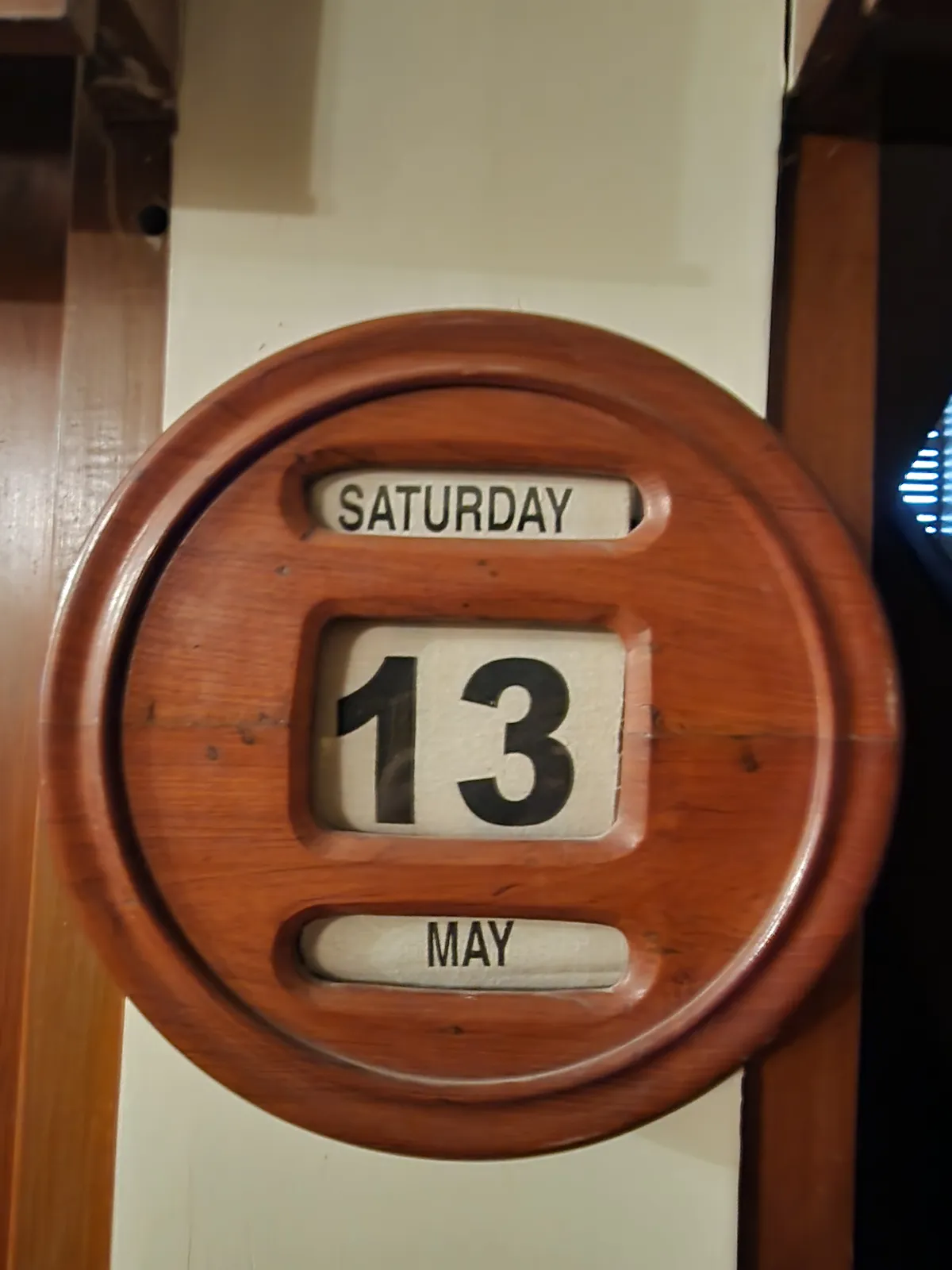
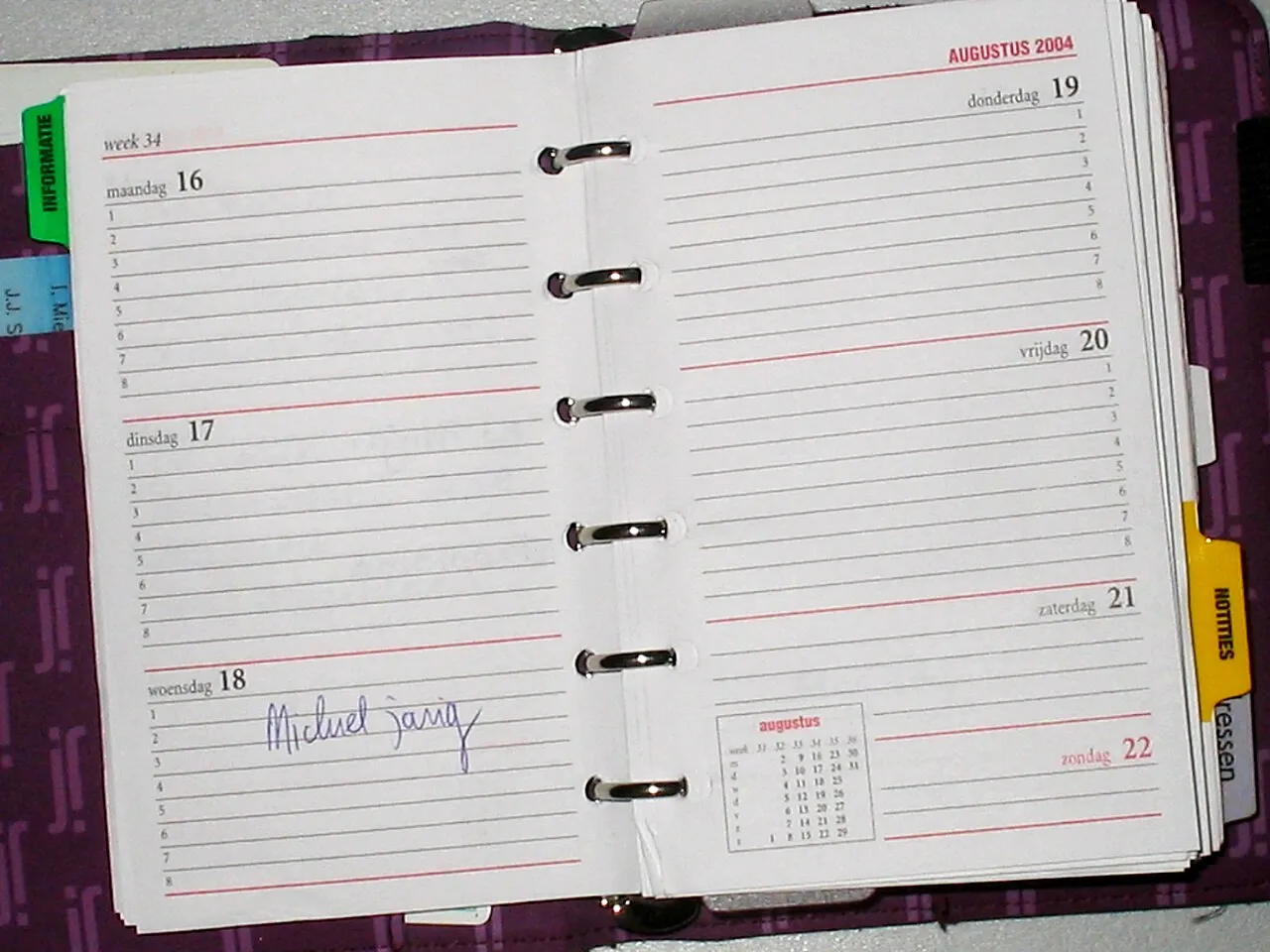
The wooden calendar photograph is by Amitbalani, via Wikimedia Commons, CC0 (public domain). The open weekly agenda photograph is by M.Minderhoud, via Wikimedia Commons, license CC BY-SA 3.0. The beach photograph (Playa Paraíso, Tulum) is by Erik Cleves Kristensen, via Wikimedia Commons, license CC BY 2.0. All three were already in this site's licensed collection; all were converted to WebP and resized. No image on this page was generated by AI.


Sources
- U.S. Department of Labor — Vacations: the FLSA does not require payment for time not worked (dol.gov/general/topic/benefits-leave/vacation_leave)
- California Division of Labor Standards Enforcement — Vacation FAQ: vesting, forfeiture and caps (dir.ca.gov/dlse/FAQ_Vacation.htm)
The calculator implements the three accrual structures described on this page, from the user's own policy figures. Expected outputs were derived independently of the code and the engine is tested against them.
About this page
Informational content only — not financial, legal or tax advice, and not a government service. The calculator's result is an estimate only, from the figures you enter. Rules and figures were checked against the official sources listed on this page. Last reviewed: October 29, 2026. ⚑ English native editorial review: pending (owner gate).